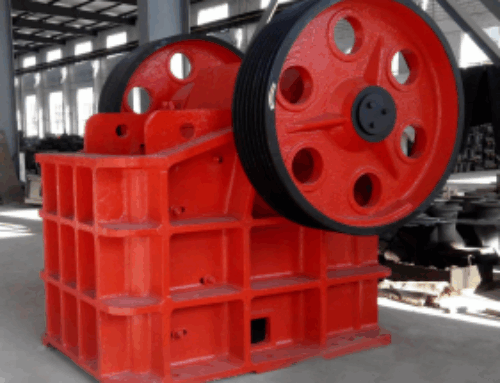
What is the LG chain feeder
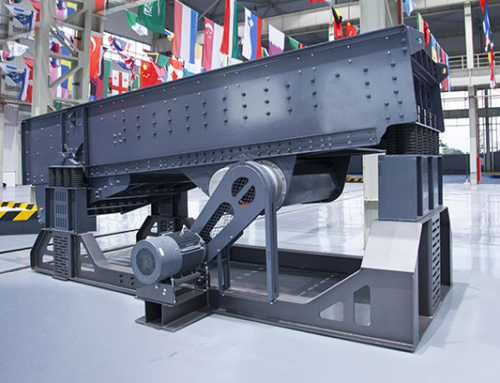
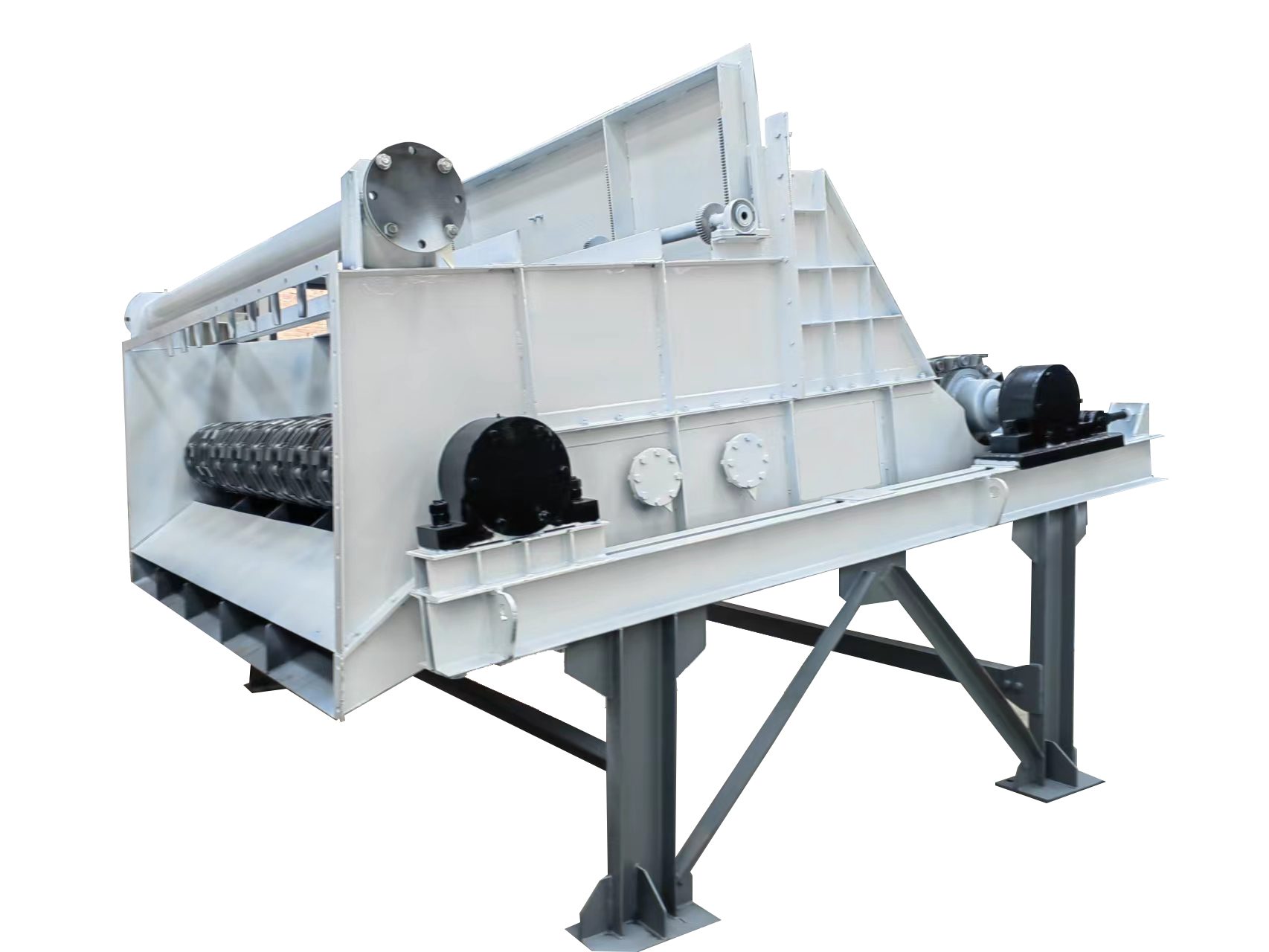
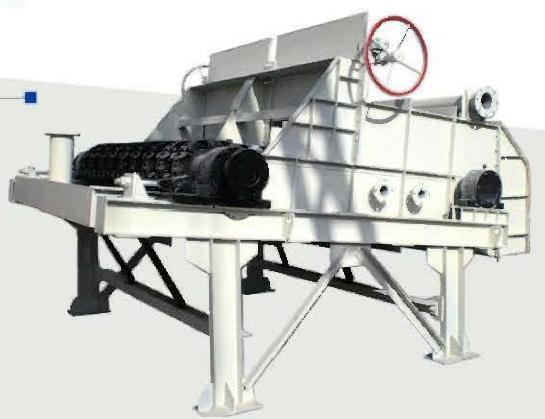
LG type chain feeder is a kind of material conveying equipment widely used in industrial fields.The main body of the LG chain feeder is usually constructed of a high-strength metal frame, which is able to withstand heavy pressure and impact in all kinds of harsh working conditions, and also ensures stability during long-term operation. The chain conveyor system is the heart of the machine and consists of robust chains and carefully designed chain plates. These chains are treated with a special process to provide high wear resistance and tensile strength, enabling them to easily cope with long hours and high intensity material handling tasks. The connection between the chain plates is tight and flexible, which not only ensures the smoothness of the materials in the conveying process, but also effectively prevents the occurrence of leakage and spilling.
Structural components of LG type chain feeder
It usually consists of drive device, chain wheel, chain, chain plate, frame and tensioning device.
Driving device: generally includes motor and reducer, which provides power for the equipment and drives the sprocket wheel to rotate.
Sprocket wheel: it is divided into active sprocket wheel and driven sprocket wheel, which transfers power through meshing with chain and drives the chain movement.
Chain: it is the key transmission part of the equipment, with high strength and wear resistance, carrying the chain plate and materials.
Chain plate: It is installed on the chain to support and convey materials, and its shape and material are selected according to different material characteristics and conveying requirements.
Frame: as the support structure of the whole equipment, it ensures the stability and reliability of the equipment.
Tensioning device: It is used to adjust the degree of tensioning of the chain to ensure the normal transmission of the chain in the process of operation.
Working Principle of LG Chain Feeder
The motor drives the active sprocket to rotate through the reducer, and the active sprocket drives the driven sprocket to rotate through the chain, so that the chain circulates on the sprocket. The chain plate moves with the movement of the chain, and the materials placed on the chain plate are conveyed from one end of the feeder to the other end, so as to achieve continuous conveying of materials. By adjusting the rotating speed of the motor or changing the transmission ratio of the reducer, the running speed of the chain can be controlled, which in turn regulates the feeding quantity of the feeder.
Features and Advantages of LG Type Chain Feeders
1.Strong conveying capacity: it can adapt to a variety of different shapes and properties of materials, including lumps, granules, etc., and has a large conveying capacity.
2.Stable feeding: smooth running and even feeding, which is conducive to ensuring the stability of the subsequent production process.
3.Wide adaptability: it can work in a variety of harsh environments, such as high temperature, high humidity, dusty environments, etc., and has relatively low requirements on the particle size and humidity of materials.
4.Good sealing: it can effectively prevent material leakage and dust flying, reduce environmental pollution and improve the working environment.
5.Convenient maintenance: the structure is relatively simple, parts are easy to replace and repair, reducing maintenance costs and downtime.
Application areas of the LG chain feeder
1.Mining industry: It is used for conveying and feeding materials such as coal, ore, etc., such as the feeding of coal mining face under the coal mine and the feeding of ore in the ore dressing plant.
2.building materials industry: conveying cement clinker, sand and gravel and other materials in the process of cement production, sand and gravel aggregate processing.
3.electric power industry: conveying coal and other fuels to boilers to ensure the normal operation of power generation equipment.
4.chemical industry: conveying all kinds of chemical raw materials and finished products, such as fertiliser, plastic granules and so on.
Operating Precautions for LG Type Chain Feeders
1.Before starting the machine, check whether the parts of the machine are in good condition, whether the chain is properly tensioned, whether there is any foreign object stuck, etc.
2.Observe the running status of the equipment during operation, such as whether there is any abnormal noise, vibration, and whether the chain runs out of shape.
3.carry out regular maintenance on the equipment, including cleaning, lubrication, tightening bolts, etc., and timely replacement of parts with serious wear and tear.
4.operate in strict accordance with the operating procedures, avoid overloading and frequent start and stop, in order to prolong the service life of the equipment.
Factors affecting the efficiency of LG chain feeders:
一.Equipment itself
1.Design and structure
Feed Chute Size: A feed chute that is too wide or too narrow may result in material build-up or insufficient conveying capacity. If the width of feed chute does not match with the material characteristics and conveying capacity, it will affect the material flow and feeding efficiency.
Quality of sprocket and chain: the tooth design and hardness of sprocket and the strength and wear resistance of chain are directly related to the stability and efficiency of transmission. Poor quality sprockets and chains are prone to wear and deformation, resulting in poor transmission and reduced feeder efficiency.
Drive device performance: the power size of the drive device, speed adjustment range and transmission efficiency, etc., will have an important impact on the operating speed and feeding capacity of the feeder. Insufficient power may not be able to meet the demand for large-load feeding, while the speed adjustment is not flexible, it is difficult to adapt to different production conditions.
2.Equipment maintenance condition
Chain tension: too loose chain will lead to chain jumping and chain release, affecting normal transmission; too tight will increase the wear of chain and sprocket, increase power consumption and reduce the efficiency of the equipment.
Lubrication: poor lubrication of key parts such as sprocket, chain, bearing and so on will increase friction resistance, resulting in increased resistance of equipment operation, increased energy consumption, and even lead to equipment failure, reducing feeding efficiency.
Parts wear: such as sprocket wear will lead to poor chain meshing, chain plate wear may lead to material leakage and poor conveying, all of which will affect the working efficiency of the feeder.
二. Material Factors
1.Material characteristics
Particle size distribution: Uneven particle size of the material, too large or too small a proportion of particles is too high, may lead to the flow of materials in the feeding trough is blocked or uneven distribution. For example, large particles are easy to jam, small particles may be adhered to the material, affecting the feeding efficiency.
Humidity and viscosity: when the humidity of the material is too high or the viscosity is large, it is easy to adhere to the feeding trough, chain and chain plate, resulting in blockage and accumulation, hindering the normal transport of materials and reducing the feeding efficiency.
Density and stacking angle: when the density of material is larger, it needs more driving force to convey; the material with larger stacking angle has poorer fluidity in the feeding trough and is easy to pile up, all of which will have an impact on the feeding efficiency.
2.Stability of material flow and feeding volume
Feeding fluctuations: If the feeding volume is big or small, more than the adaptive range of the feeder, it will lead to unstable operation of the equipment, the chain and the drive device to withstand frequent changes in the load, affecting the service life and efficiency of the equipment.
Uneven material flow: when the material enters the feeder, if the flow is not evenly distributed, it will lead to local material accumulation or vacancy in the feeding trough, affecting the overall feeding effect.
三.Operational environmental factors
1.Working temperature
High-temperature environment: In a high-temperature environment, the parts of the equipment (such as chains, bearings, motors, etc.) are susceptible to thermal expansion, resulting in changes in the fit gap, increasing frictional resistance, and even causing equipment failure. At the same time, high temperature may also make the lubricating oil performance decline, aggravate the wear and tear of the equipment, reduce the efficiency of the feeder.
Low temperature environment: In low temperature environment, the viscosity of the lubricant increases, the fluidity becomes poor, the resistance increases when the equipment starts, and the energy consumption will be increased accordingly when running. In addition, low temperature may also make some materials become brittle, affecting the reliability and service life of the equipment.
2.Dust and impurities
Dust accumulation: dust in the working environment will enter the equipment, accumulate in the chain, sprocket, bearings and other parts, increase the friction resistance, affecting the normal operation of the equipment. Long-term accumulation may also lead to increased wear and tear of parts, reducing the efficiency of the equipment.
Mixing of impurities: If the material is mixed with hard impurities (such as iron, stone, etc.), it may jam the chain or damage the chain plate, sprocket and other parts, leading to equipment failure and affecting the feeding efficiency.
In a word, LG type chain feeder has become an indispensable and important equipment in modern industrial production with its excellent performance, wide adaptability and reliable operation. Its excellent performance in the field of material conveying, for the development of various industries to provide a solid guarantee, and promote industrial production continues to move towards a higher level of efficiency and quality. With the continuous progress of science and technology and the continuous growth of industrial demand, I believe that the LG type chain feeder will continue to play a more important role in the future, continuous innovation and development, for the industrial field to bring more surprises and contributions.