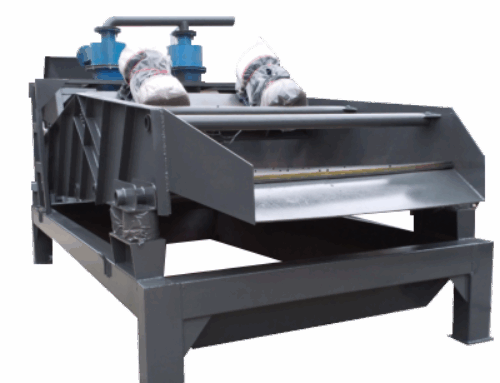
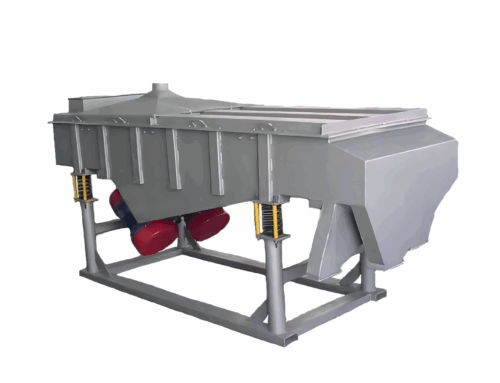
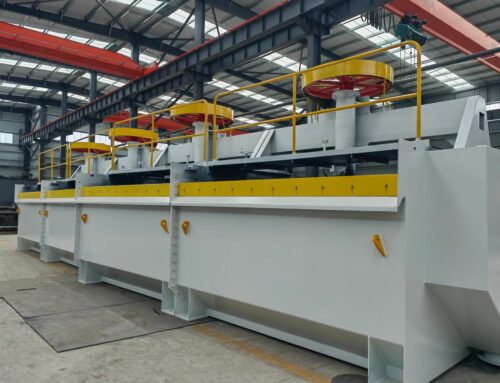
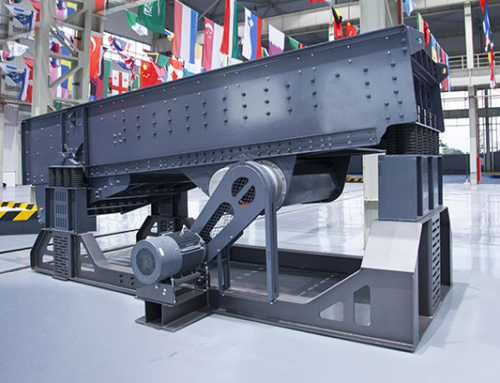
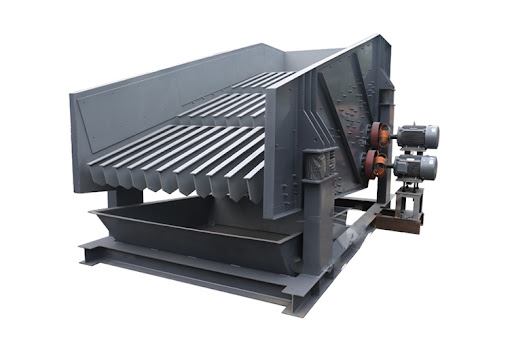
Vibrating feeder is a kind of conveying system mainly driven by electromagnetic drive or unbalanced motor, which is used to feed materials evenly, quantitatively and continuously into the specified silo. Its working principle is mainly to use the excitation force of the drive to make the guide trough vibration, the material through the controlled linear vibration, produce jumping, throwing movement, through the continuous reciprocating vibration of the guide trough, so that the material is uniformly and continuously fed into the designated silo.
Vibratory feeders have played no small part in creating modern manufacturing. In turn, our economy has grown with the development of tools such as vibratory feeders that reduce the need for workers to stand on assembly lines and automate production processes. Feeders can move raw materials to their processing stations or finished products to their final destination. As a result, manufacturers save money that would otherwise be spent on manual labor. With the use of conveyors, products can be moved faster through the production process to meet greater demand. As the population increases, the demand also increases over time. Generally, when incorporating vibratory feeders into a system, it saves time for everyone involved.
Vibrating feeder principle and application industry
A vibratory feeder is a device that utilizes vibration to move material through a machine while controlling the flow rate. Vibratory feeders utilize vibration and gravity to move materials forward. Gravity affects the direction of these materials, moving them downward or sideways. At the same time, vibration is utilized to trigger the movement of the material. In response, the material on the feeder moves in unimaginably small jumps. As a commonly used vibrating feeder equipment, the feeder is suitable for conveying a variety of materials, high efficiency and low consumption, simple operation. Electromagnetic vibrating feeder selection is very important, affecting the late use of equipment! Below to take you to understand what factors need to be considered when selecting electromagnetic vibrating feeder.
1、vibrating feeder unit time feeding amount is how much. Material trough is standard, or need special customization. Feeder feeding volume is related to the size of the trough, amplitude and other factors.
2、what materials are conveyed, what is the specific gravity of the material. Whether the material is corrosive, whether the surrounding environment needs to be dustproof, the moisture content of the material needs to be considered.
3、feeder material whether there are special requirements, such as must be clearly explained.
4、Control box is the standard equipment of the feeder, the material and form of its requirements should be marked clearly.
Industries where vibratory feeders can be used
Vibratory feeders are used to handle bulk materials in all industries, including mines, coal yards, stockyards, pharmaceutical, automotive, electronics, cosmetics, food and packaging industries. So whether you’re dealing with bulky, chunky materials or finer particles, vibratory feeders can get the job done. Additionally, these machines can be used to convey materials such as glass, foundry, steel and plastics in construction and manufacturing facilities, not to mention recycled materials, pulp and paper, the metalworking industry, dry bulk solids and more. This design process and practical flexibility can make vibratory feeders the best choice for most manufacturing companies.
The main features of the vibrating feeder
The main features of the vibrating feeder are: simple structure, stable vibration, feeding uniformity, good continuity; adjustable excitation force, good adjustability, can uniformly adjust the amount of feed, easy to operate; small amplitude, high frequency, low noise, low power consumption, high production capacity, no rushing phenomenon; if the closed body, to prevent dust pollution and other characteristics. Electromagnetic vibrating feeder feeding capacity adjustment is usually realized by adjusting the amplitude and the size of the discharge door opening.
Installation Notes:
Installation of equipment installation body: electromagnetic vibrating feeder exciter using flower basket screws hanging in the lower rear of the tank body, electromagnetic vibrating feeder site installation should pay attention to the following points.
1、when the tank is installed, it should be tilted downward by 10 °. However, for viscous materials or materials with high moisture content, the tilt angle can be increased to 15 ° to prevent material self-flow.
2、electromagnetic vibrating feeder is very sensitive to the load, affecting the output of the equipment, resulting in equipment damage. Installation should minimize the pressure acting on the feeder, such as adding a sloping plate at the discharge port to reduce the direct vertical impact of the material on the trough.
3、equipment site installation is completed, open the shell inspection cover, check and adjust the assembly air gap between the iron core for the standard value of 2 ± 0.1mm, while keeping the working surface parallel (level less than 0.15mm); to confirm that there is no foreign matter between the assembly air gap, etc.; all the fastening bolts must be used to prevent loosening of the washer; the equipment body should be sealed according to the design of the level of protection, to prevent the entry of dust, moisture and cause failure.
Installation of supporting electronic control box: with electromagnetic vibrating feeder supporting electronic control box is generally installed in the vicinity of the main equipment, should be considered on-site dust and other environmental impact on the stability of the electronic control box. This not only facilitates on-site operation, timely adjustment of the excitation force, but also facilitates the production site dust, explosion-proof. Installation of electronic control box should pay attention to the following points: First, check whether the equipment electronic control box meets the requirements of the level of protection, to avoid driving due to dust or environmental humidity caused by the control box can not work properly; Second, according to the electrical schematic diagram to connect, check the control box internal wiring there is no loosening, falling off; Third, check the thyristor to ensure that the heat dissipation is good; Fourth, check the head of the exciter and the control box according to the provisions of the installation of electrical equipment grounding.
How to improve the productivity of vibrating feeder
1、vibrating feeder must be viewed before the use of instructions for safety and technical education, can be manipulated.
2、vibrating feeder for batching, feeding in order to ensure uniform and stable feeding, to prevent self-flow of materials should be installed in accordance with a certain angle, such as continuous feeding of general materials, can be tilted down 10 ° installation. For viscous materials and materials with large water content, it can be installed at 14° downward.
3、after the installation of the eeder should be left 20mm travel clearance horizontal should be horizontal, vibration damping device using flexible connections. When running, it is strictly prohibited to stand people on the side of the machine, touching the body, adjusting, cleaning or inspecting with hands;
4、Before the empty test, all the bolts should be tightened once, especially the vibration motor ground bolts, 3-5 hours of continuous operation should be re-tightened once.
5、In the process of use if you find the motor heat, abnormal ringing, motor screws loose problems should be promptly stopped to deal with.

Debugging Notes:
Electromagnetic vibrating feeder site installation is completed, the need for sequential no-load debugging and feeding debugging, to ensure that the completion of the construction of electromagnetic vibrating feeder can be normally put into formal operation. Electromagnetic vibrating feeder site debugging considerations are summarized below.
1、no-load debugging
Electromagnetic vibrating feeder no-load debugging, need to carefully check to confirm that the air gap in the standard range, and by tightening the plate spring, compression bolts and other ways to adjust the elastic system. Electromagnetic vibrating feeder
No-load start, adjust the potentiometer knob, gradually increase the current, at this time if the current is less than or equal to the rated value, and the amplitude is small, then loosen the top tightening bolts on both sides of the plate spring group, in order to increase the amplitude, if the amplitude is small, the current is relatively large, then continue to fasten the plate spring compression bolts; air gap adjustment and elasticity of the system should be complementary to the tuning.
2、 feeding debugging
Electromagnetic vibrating feeder no-load debugging is completed, should also be given to the material debugging. After feeding, start the electromagnetic vibrating feeder, observe the operation of the equipment, timely adjustment. The main considerations for this operation are as follows.
① According to the actual flow characteristics of the material, adjust the vibrating feeder tank at the inlet bar, bar too much, the silo is easy to cause blockage of large blocks, bar too little, but also easy to lead to unstable tank production, it is recommended that the bar spacing for the maximum particle size of the material 1.5 times. ② For materials with high humidity or viscosity, the output may be unstable, need to be lined with polymer polyethylene plate at the bottom of the tank to prevent coal accumulation. At the same time, adjustable baffle plate is made on site at the outlet of the tank to control the instantaneous maximum flow of coal and prevent the downstream belt conveyor from running off or scattering. ③ If the current varies greatly, it may cause the top bolts to loosen, the plate spring to break, and the air gap to change, etc. If the vibration is weak, the amplitude of the potentiometer is almost unchanged or the current is too large, it is necessary to check whether the thyristor is damaged or there is any foreign matter in the air gap. ④ The feeding material suddenly increases, and the current of the equipment will also suddenly increase, adjust to control the maximum flow rate, or clean up the material in the tank after each equipment shutdown, and avoid overload startup. ⑤ After adjusting the potentiometer machine noise, amplitude irregularity, there is a violent impact sound, to check whether the plate spring is broken, the vibrator and the slot between the connecting bolts are loose, whether the air gap is normal, whether the core wiring is correct.
Electromagnetic vibrating feeder as a modern enterprise automated production material conveying system feeding equipment, in the production system before the official operation of the site installation and no-load and feeding debugging process, the standardization of the construction is critical, only so that the production system can be formally operated to give full play to its advantages, to ensure that the feeder system stable operation.