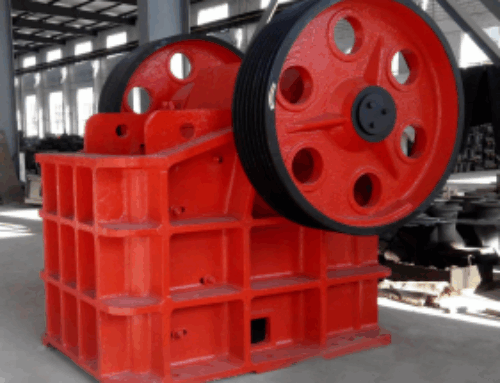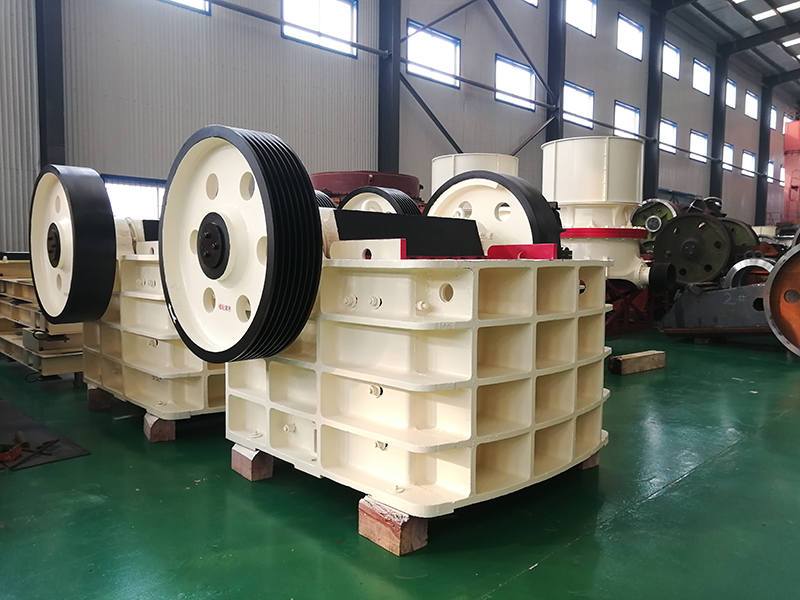
In the huge system of modern industrial production, from the first line of mining, to the factory floor of building materials production, the figure of the crusher is ubiquitous, and has become an indispensable and important equipment in the production process of many industries. It is because of the key position of the crusher in industrial production, the performance of different types of crusher research and application of the discussion is particularly important. Next, we will focus on the jaw crusher, classifier crusher and double roll crusher, three common crusher, in-depth analysis of their performance characteristics and their respective materials suitable for crushing, for industrial production equipment selection to provide valuable reference.
一.Jaw Crusher
1.Working Principle
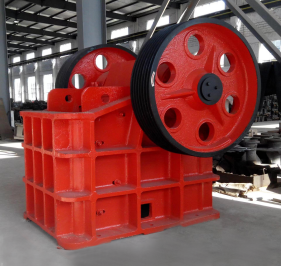
The working principle of the jaw crusher vividly simulates the movement of the two jaws of an animal. The motor drives the belt and pulley, which in turn drives the eccentric shaft to make the movable jaw move up and down. When the movable jaw rises, the angle between the elbow plate and the movable jaw becomes larger, pushing the movable jaw plate to approach the fixed jaw plate rapidly, at this time the materials entering the crushing cavity are subjected to strong extrusion between the two jaw plates, rubbing and crushing and other multiple effects, and gradually crushed; when the movable jaw downward, the angle between the elbow plate and the movable jaw becomes smaller, and the movable jaw plate, under the action of the tie rod and the spring, leaves the fixed jaw plate, and the crushed materials are freely discharged through the outlet of the lower part of the jaw cavity by the action of gravity. The crushed material will be discharged freely through the discharge port in the lower part of the jaw cavity under the force of gravity. With the continuous rotation of the motor, the movable jaw will do periodic crushing and discharging action to achieve the batch crushing of materials.
2.Performance Advantages
The jaw crusher has a simple structure, which makes it has obvious advantages in manufacturing, installation and maintenance. For some small mines or quarries, technicians can easily troubleshoot and repair it, greatly reducing equipment downtime and lowering maintenance costs.
Secondly, the jaw crusher’s large crushing ratio can effectively break large materials into smaller particles, with a crushing ratio of up to 6 – 8. This feature makes it easy to handle materials of various hardnesses, whether they are soft rocks or hard ores, and can be smoothly crushed to a particle size suitable for subsequent processing.
Furthermore, the jaw crusher works reliably and can work continuously and stably in harsh working environments. Even under dusty and high humidity working conditions, it can still maintain good performance, providing a strong guarantee for the continuity of industrial production.
However, jaw crusher its productivity is relatively low, especially compared with some new crushing equipment, the processing capacity per unit time may be limited. In a large-scale production line, several jaw crushers may need to work simultaneously to meet the output demand.
3.Materials
The jaw crusher is suitable for a wide range of materials with compressive strength up to 320 MPa. Commonly, such as river pebbles, marble, calcite, limestone, basalt, quartzite and so on.
二.Grading Crusher
1.Working Principle
The working principle of the grading crusher is mainly through the relative rotation of the rolls with teeth, the materials entering the crushing chamber are squeezed, sheared, split and other comprehensive effects, to achieve the crushing and grading of materials. Take the common double-toothed roll crusher as an example, the electric motor is connected to the reducer through the torque-limiting hydraulic coupling, which reduces the impact and vibration during start-up and also provides overload protection. A connecting cover integrates the motor and reducer to ensure that they are concentric. Toothed roll is the core component, the teeth are arranged in spiral shape, and the tooth seat and main shaft are tightly assembled through dovetail groove, which enhances the shear strength. When the material enters into the crushing chamber, the rotating movement of the rollers screens out the small particles on the one hand, so that they can directly enter the discharge chute through the gap between the rollers; on the other hand, the teeth will be used to break the large particles into small particles in line with the requirements of the particle size. In this process, the crusher also makes use of the characteristic that the compressive strength of the material is much higher than its shear and tensile strength, and crushes the material mainly by tensile force and shear force, thus reducing the rate of powder generation.
2.Performance Analysis
Grading crusher has the dual effect of crushing and grading, and can independently complete the crushing and screening operations, which makes it possible to simplify the process in the production process and reduce the investment in equipment and floor space.
Its processing capacity is large, some large-scale grading crusher processing capacity up to 10,000t / h, to meet the needs of large-scale production. In the mining of open-cast coal, the grading crusher can quickly process a large amount of coal and guarantee the supply of coal. The material is forcibly crushed by fixed roll centre distance, and the roll centre distance is adjustable, which can strictly guarantee the product size, and produce products with uniform size according to different production requirements. In the production of construction aggregate, the grading crusher can accurately control the particle size of the aggregate to meet the requirements of different construction projects on the particle size of the aggregate.
The grading crusher has a simple structure, low machine height and vibration-free operation, which not only facilitates the installation and maintenance of the equipment, but also reduces the requirement for the foundation of the workplace and lowers the installation cost. It has good processing ability for sticky and wet materials, and will not be blocked because of the high humidity of the materials. It can still operate stably and guarantee the continuity of production when dealing with materials containing a certain amount of moisture, such as coal and municipal rubbish.
3.Applicable materials
Classified crusher is suitable for materials with crushing strength below 300MPa, such as coal, coke, limestone, municipal rubbish and so on. In the coal industry, it can be used for coal grading and crushing, crushing of extra-large coal, crushing of washed coal and gangue, as well as crushing and screening of sticky and wet coal.
三.Double Roll Crusher
1.Working Principle
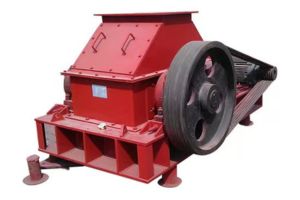
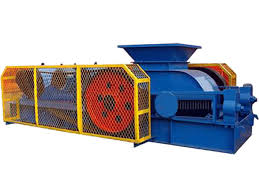
The core working part of the Double Roll Crusher is the two rotating rolls, when the material is fed into the inlet of the crusher, it will fall into between the two rolls. As the rolls continue to rotate, the material is subjected to strong extrusion, under the action of extrusion pressure, the material is gradually broken. In addition to extrusion, when the shape of the material is irregular or has a certain brittleness, the round rollers will also have a splitting effect on it, further promoting the crushing of the material. This combination of extrusion and splitting makes the double roller crusher able to effectively crush the materials into the required particle size. In the actual working process, the trajectory of the material between the two rolls is more complicated and subject to a variety of forces. Due to the rotating speed of the rolls and the influence of surface friction, the material will constantly roll and move between the rolls, thus ensuring that all parts can be fully crushed, and ensuring the uniformity of the crushing effect.
2.Performance advantages and shortcomings
Double roll crusher has many significant performance advantages. It is suitable for coarse crushing and medium crushing operations, and can meet the requirements for material particle size at different production stages. In some small mines or processing plants, the double roll crusher can be used as primary crushing equipment to initially crush large materials and provide suitable raw materials for the subsequent processing procedures; in some of the intermediate crushing process which is not particularly strict on the requirements of material granularity, it can also play an excellent role in further crushing the roughly crushed materials into smaller particles. By adjusting the gap between the two rolls, the double roller crusher can conveniently control the particle size of the discharged material, and users can flexibly produce products of different particle sizes according to the actual production requirements. This flexible particle size adjustment function makes it widely used in many industries. It also has a simple structure, easy to operate the characteristics of the equipment maintenance and maintenance is relatively easy, even if the technical level is not very high operators, can quickly get started and skilled operation.
The double roll crusher is excellent in processing sticky and wet materials. Due to its crushing principle and structural characteristics, sticky and wet materials are not easy to block the crushing chamber during the crushing process, and it can maintain continuous and stable production. In the coal processing industry, when dealing with coal containing a certain amount of moisture, the double roll crusher can crush it smoothly without affecting the production efficiency due to the humidity of the coal. In addition, the crushing ratio of the double roll crusher is relatively large, which can effectively crush larger materials into smaller particles and improve the crushing efficiency of materials.
However, double roll crusher for sticky materials, although it has some advantages in dealing with sticky and wet materials, but when the material viscosity is too high, it may still be blocked, affecting the normal operation of the equipment. When dealing with some viscous chemical raw materials, it may be necessary to pre-treat the materials or take special anti-clogging measures to ensure the stable operation of the equipment. The roll surface is easy to wear out during long-term crushing work, which not only affects the crushing effect of the equipment, but also requires regular replacement of the roll surface, increasing the maintenance cost and downtime of the equipment.
3.Material Suitability
Double roll crusher is suitable for crushing medium hardness materials, such as coking coal, sintered ore, limestone and so on. In the coal industry, after the coking coal is crushed by the double roll crusher, the particle size is more uniform, which is beneficial to the subsequent coking process.
In the construction material industry, limestone is an important raw material for producing cement, lime and other products. Double roll crusher can crush limestone into particles of different sizes to meet the demand of cement production and construction aggregate production. In cement production, limestone is crushed by double roll crusher and then entered into subsequent grinding, calcination and other processes to produce high quality cement; in construction aggregate production, crushed limestone particles can be used for the preparation of concrete, road base layer and so on, to provide high quality aggregates for construction projects. Besides the above materials, double roll crusher can also be used to crush some other medium hardness materials, such as shale, gypsum and so on. In the chemical industry, shale can be used to extract shale gas or prepare chemical raw materials after crushed by double roller crusher; in the gypsum processing industry, double roller crusher crushes gypsum into suitable particle size, which can be used for the production of gypsum board, gypsum powder and other products .
In industrial production, it is crucial to choose the right crusher, which requires comprehensive consideration of various factors such as material characteristics and production requirements.